



Applying for Social Security Disability benefits can be confusing, especially when you are trying to understand how the Social Security Administration (SSA) decides whether you qualify. A diagnosis alone does not automatically determine the outcome of a disability claim. Instead, Social Security generally uses a five-step sequential evaluation process to determine whether an adult meets its definition of disability. The process looks at whether you are working, the severity of your medical conditions, whether your condition meets or equals certain medical criteria, your ability to perform past work, and whether you can adjust to other work.
Understanding these five steps can help you see what Social Security is actually evaluating and why medical documentation of your functional limitations can be so important to your claim.

Key Takeaways
- Social Security uses a five-step sequential evaluation process to evaluate most adult disability claims.
- The first questions involve your current work activity and whether you have a severe medically determinable impairment.
- Having a diagnosis that appears in Social Security’s Listing of Impairments does not necessarily mean you automatically qualify for disability benefits.
- If you do not meet or medically equal a listing, Social Security considers what you can still physically and mentally do despite your medical conditions.
- Your past work and your ability to adjust to other work can become important parts of the disability decision.
- Medical records should document not only your diagnoses, but also how your symptoms limit your ability to function consistently in a work environment.
What Is Social Security’s 5-Step Disability Evaluation Process?
Social Security’s sequential evaluation process asks a series of questions about your work activity, medical conditions, functional limitations, and ability to work. A claim can potentially be decided at different stages of this process. If Social Security cannot make a determination at one step, the evaluation generally continues to the next step.
- Are you engaging in substantial gainful activity?
- Do you have a severe medically determinable impairment?
- Does your impairment meet or medically equal a Social Security listing?
- Can you perform your past relevant work?
- Can you adjust to other work?
Step 1: Are You Working?
The first step considers your current work activity. Social Security evaluates whether you are performing substantial gainful activity (SGA), which generally refers to work activity involving significant physical or mental activities performed for pay or profit. SSA establishes earnings guidelines for SGA and updates the dollar amounts periodically.
For many applicants who have stopped working because of their medical conditions, the evaluation proceeds to Step 2. However, working does not necessarily mean you should assume that you cannot qualify. Your earnings and the circumstances surrounding your work activity can matter, which is why your individual situation should be evaluated carefully.
Step 2: Do You Have a Severe Medically Determinable Impairment?
At Step 2, Social Security asks whether you have a medically determinable impairment that is severe. In simpler terms, there must be appropriate medical evidence establishing an impairment, and the impairment must significantly limit your ability to perform basic work activities.
Those limitations can involve physical or mental abilities that are necessary in the workplace. For example, your medical condition may affect your ability to stand, walk, sit for extended periods, lift, carry, concentrate, remember instructions, interact with other people, maintain a regular schedule, or perform tasks consistently throughout a workday.
This is one reason medical documentation matters. Simply reporting severe pain, fatigue, memory problems, or other symptoms is different from having medical evidence that establishes an underlying impairment and documents how your condition affects your ability to function.
Step 3: Does Your Condition Meet or Equal a Social Security Disability Listing?
Step 3 is one of the most commonly misunderstood parts of the Social Security Disability process. Social Security maintains medical criteria commonly referred to as the Listing of Impairments or the “Blue Book.” These listings describe medical criteria for impairments that SSA considers severe enough to prevent an adult from performing substantial gainful activity when the applicable requirements are satisfied.
Someone may search for a diagnosis online or ask an AI tool about a particular medical condition and discover that Social Security has a listing involving the same disease or body system. That does not necessarily mean the person meets the listing. Having the same diagnosis or condition mentioned in the Blue Book is only part of the analysis. Your medical evidence must satisfy the specific requirements of the applicable listing, or your impairment must medically equal a listing.
If your condition does not meet or equal a listing, your claim is not automatically denied. Instead, Social Security generally continues the evaluation to determine how your medical conditions affect your ability to work.
What Happens If You Don’t Meet a Social Security Blue Book Listing?
You may still qualify for Social Security Disability benefits even if your medical condition does not meet or medically equal a listing. Before Social Security evaluates your ability to perform past work or other work, it assesses your residual functional capacity (RFC).
Your RFC represents what you can still do despite limitations caused by your medically determinable impairments. Social Security may consider how long you can sit, stand, or walk, how much you can lift or carry, whether you need additional breaks, whether your symptoms cause you to be off task, your ability to concentrate and interact with others, and other physical or mental restrictions supported by the evidence.
This is where the disability evaluation moves beyond simply asking, “What medical condition do you have?” The more important question becomes, “What can you still reasonably be expected to do in a work setting despite your medical conditions and limitations?”
Step 4: Can You Perform Your Past Relevant Work?
At Step 4, Social Security considers whether your residual functional capacity allows you to perform your past relevant work. This makes an accurate description of your work history important because SSA needs to understand what your previous jobs actually required physically and mentally.
Depending on your occupation, Social Security may need information about how much you lifted, how long you stood or walked, how much time you spent sitting, whether you operated equipment, the complexity of your duties, and other demands of the job. SSA’s vocational evaluation framework has historically used occupational information that includes the Dictionary of Occupational Titles (DOT), along with other vocational evidence and resources.
The central question at this stage is whether your current functional capacity allows you to return to qualifying past work. If Social Security determines that you can perform past relevant work, your claim may be denied at this step. If you cannot perform your past relevant work, the evaluation proceeds to Step 5.
Step 5: Can You Adjust to Other Work?
If you cannot perform your past relevant work, Social Security considers whether you can adjust to other work that exists in significant numbers in the national economy. At this stage, SSA considers your residual functional capacity along with vocational factors such as your age, education, and work experience.
This is where the combination of your limitations can become especially important. For example, the evidence may show that you cannot stand or walk for prolonged periods, cannot lift more than a certain amount, require additional breaks, have difficulty maintaining concentration, are frequently off task because of symptoms, have limitations using your hands, or have difficulty maintaining consistent attendance.
A person may be physically capable of performing certain individual tasks, but that does not necessarily answer whether the person can sustain competitive employment. Social Security considers whether there is other work the claimant can adjust to within the limitations supported by the record.
What Is Residual Functional Capacity in an SSDI Case?
Residual functional capacity is one of the most important concepts in many Social Security Disability cases. Your RFC is an assessment of the most you can still do despite limitations caused by your medically determinable impairments.
For someone with a physical condition, the RFC might address lifting, carrying, standing, walking, sitting, pushing, pulling, reaching, or other physical activities. For someone with a mental health or cognitive condition, it may address understanding and remembering instructions, maintaining attention, interacting with other people, adapting to workplace changes, or completing tasks consistently. Someone with multiple medical conditions may have both physical and mental limitations that need to be considered together.
This is why a disability case is often about much more than the name of your diagnosis. Two people may have the same medical condition but experience very different symptoms and functional limitations.
Why Do Your Medical Records Matter in the 5-Step Disability Process?
Medical records provide evidence Social Security uses when evaluating your impairments and resulting limitations. Ideally, your records provide a clear picture of your condition over time, including diagnoses, examinations, testing, treatment, medications, treatment response, symptoms, and documented functional limitations.
For example, if chronic pain prevents you from standing for long periods, that limitation may be important to the evaluation. If migraines occur unpredictably several times per month and interfere with your ability to function, their frequency, duration, treatment, and effects may matter. If a mental health condition makes it difficult to concentrate, remember instructions, or complete tasks, consistent documentation can help explain how those symptoms affect your ability to work.
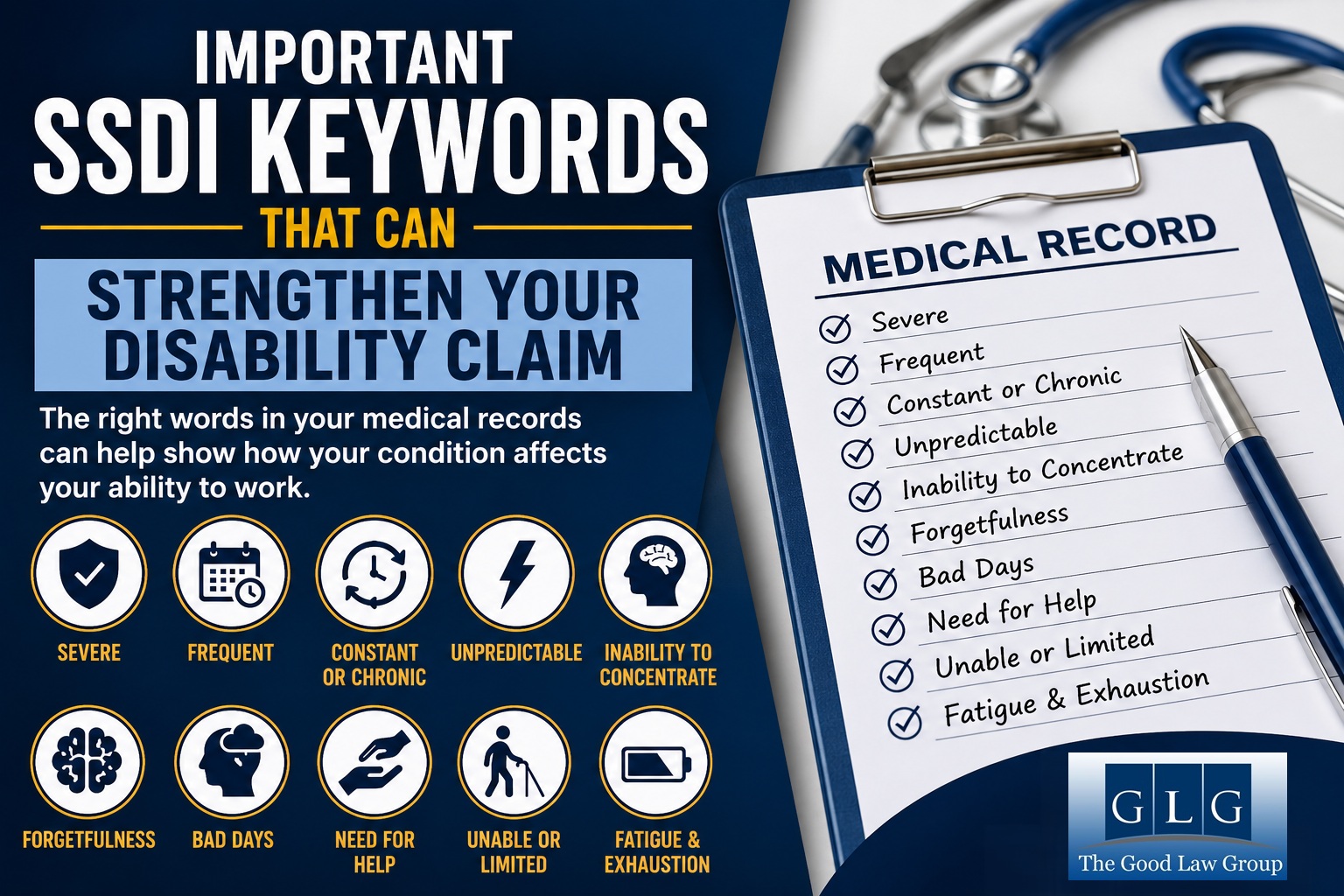
The goal is not to use particular “magic words” in your medical records. The important thing is for the evidence to accurately document your medical conditions, symptoms, treatment, and the limitations that affect your day-to-day functioning and ability to work.
Can AI Tell You Whether You Qualify for Social Security Disability?
AI tools and online resources can be useful for learning about Social Security Disability, but they cannot determine the outcome of an individual claim. A disability case depends on the actual evidence, including medical records, work history, age, education, treatment history, and documented functional limitations.
Online information can also oversimplify Social Security’s rules. For example, an AI tool might identify a Blue Book listing associated with your diagnosis, but finding your medical condition in the Listing of Impairments does not establish that you satisfy all of the listing’s requirements or that your claim will be approved. Online and AI resources are best used to help you understand the process rather than as a substitute for an individualized evaluation of your disability claim.
Why Is Understanding the Five-Step Disability Process Important?
The five-step evaluation process helps explain why two people with the same diagnosis can receive different decisions. Social Security is not simply asking whether you have a medical condition. The agency evaluates the severity of your impairment, the medical evidence, your functional capacity, your past work, and, when necessary, whether you can adjust to other work.
Understanding where your case fits within this process can also help you identify which issues may become important as your claim moves forward. Your diagnosis matters, but documenting exactly how your condition prevents you from sustaining work can be just as important.
Need Help With Your Social Security Disability Claim?
If you are applying for Social Security Disability benefits or appealing a denied claim, The Good Law Group can help you understand how Social Security’s five-step evaluation process applies to your case. Our attorneys focus on Social Security Disability cases and can review your medical evidence, work history, and limitations to help you navigate the application or appeals process.
Call The Good Law Group at (800) 419-7606 for a free disability case evaluation.
Related older posts: What is the 5 Step Sequential Evaluation Process for SSD Benefits
This article is for general informational purposes and is not legal advice.