


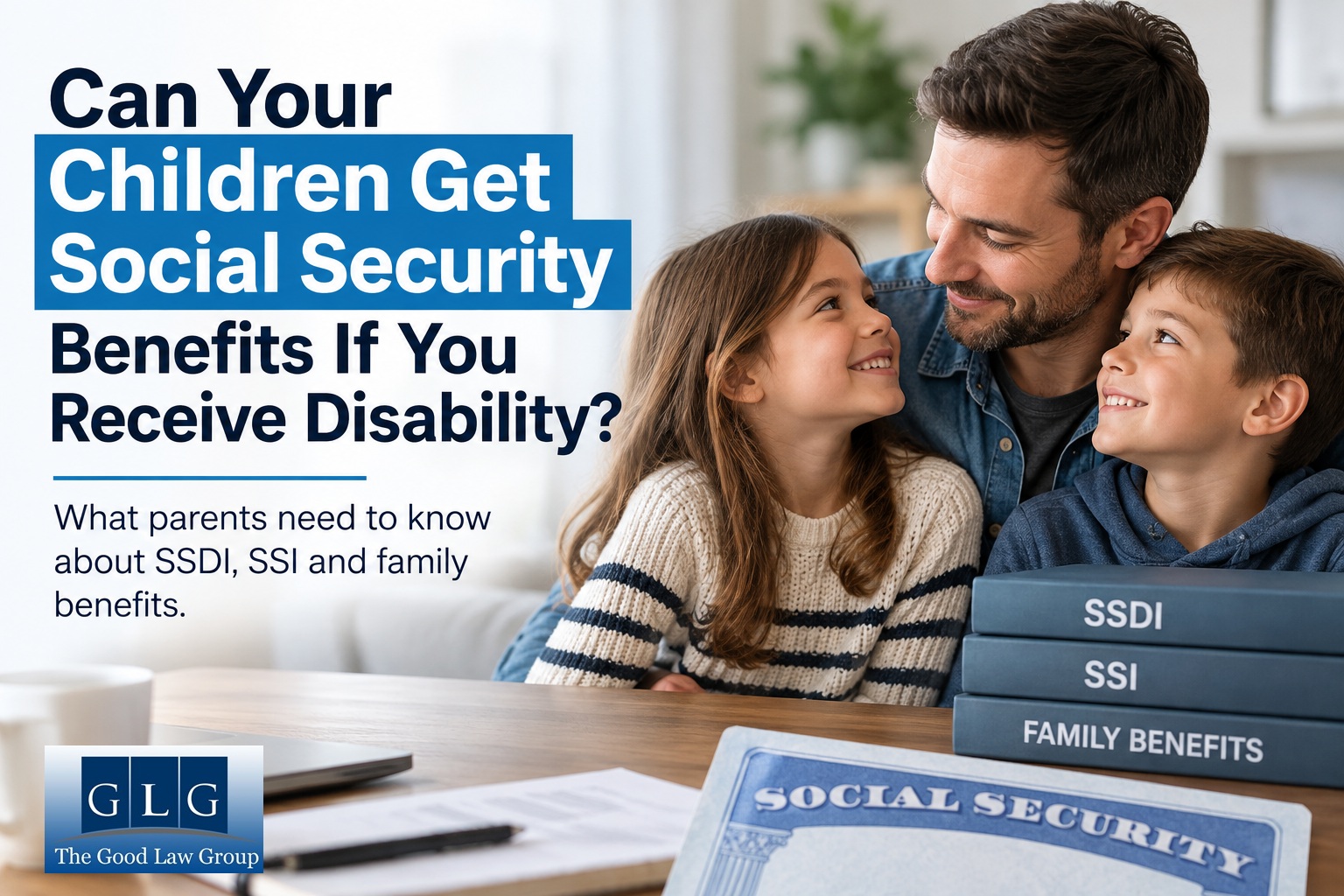
If you receive Social Security Disability benefits, you may be wondering whether your children can receive benefits too. The answer depends largely on which type of disability benefit you receive. Children of a parent receiving Social Security Disability Insurance (SSDI) may qualify for benefits based on the parent’s Social Security earnings record, while Supplemental Security Income (SSI) works differently.
Understanding the difference between SSDI and SSI is important because the two programs have different funding sources and different rules for family benefits. Here is what parents receiving disability benefits should know about potential Social Security benefits for their children.
Key Takeaways
- Children of a parent receiving SSDI may be eligible for Social Security family benefits based on the parent’s earnings record.
- A qualifying child generally must be unmarried and under age 18, or ages 18 to 19 and attending elementary or secondary school full time.
- An adult child with a qualifying disability that began before age 22 may potentially receive benefits on a parent’s Social Security record.
- SSI does not provide dependent benefits to a child simply because a parent receives SSI.
- A child with a qualifying disability may potentially receive SSI based on the child’s own eligibility and applicable household income and resource rules.
Can Your Child Receive Benefits If You Get SSDI?
Yes, certain children may qualify for Social Security family benefits when a parent receives Social Security Disability Insurance (SSDI). SSDI is based on a worker’s employment history and the Social Security taxes paid during those years of work. When a worker qualifies for Social Security Disability benefits, certain family members may also become eligible for benefits based on that worker’s Social Security record.
For a child to potentially qualify, Social Security generally requires the child to be unmarried and younger than age 18, or between ages 18 and 19 and attending elementary or secondary school full time. There are also separate rules that may allow benefits to continue or begin for an adult child who has a qualifying disability that started before age 22.
Why Can Children Receive Benefits When a Parent Gets SSDI?
Social Security Disability Insurance is an earned benefit tied to a worker’s Social Security-covered employment. Workers pay Social Security taxes while working, and those earnings can provide protection not only for the worker but, in certain circumstances, for eligible members of the worker’s family.
This is why SSDI is different from a needs-based program such as SSI. When a parent becomes entitled to Social Security Disability benefits, an eligible child may be able to receive a family benefit based on the parent’s earnings record rather than the child’s own employment history.
How Long Can a Child Receive Benefits From a Parent’s SSDI?
For many children, Social Security benefits based on a parent’s record end when the child turns 18. However, benefits may continue for an unmarried child who is 18 or 19 and is a full-time student at an elementary or secondary school. Different rules can apply when the child has a qualifying disability that began before age 22.
Because age, school status, disability status, marital status, and the child’s relationship to the worker can affect eligibility, families should not assume that benefits automatically end or continue at a particular age without reviewing their circumstances.
Can an Adult Child With a Disability Receive Benefits From a Parent’s SSDI?
Potentially. An adult whose qualifying disability began before age 22 may be eligible for benefits based on a parent’s Social Security earnings record if the applicable requirements are met. Social Security commonly refers to these as benefits for a Disabled Adult Child (DAC).
These rules can be particularly important for families caring for an adult son or daughter who developed a significant disability during childhood or before age 22. The adult child does not necessarily need their own substantial work history because the benefit can be based on the qualifying parent’s Social Security record.
Can Your Children Get Benefits If You Receive SSI?
SSI works differently from SSDI. Supplemental Security Income is a needs-based program for people who have limited income and resources and are age 65 or older, blind, or have a qualifying disability. It is not based on a worker’s Social Security earnings record, so a parent’s receipt of SSI does not create the same type of dependent family benefit available through Social Security Disability Insurance.
That does not mean a child can never receive SSI. A child younger than age 18 who is blind or has a qualifying disability may independently qualify for SSI if the applicable financial and disability requirements are satisfied. When determining a child’s SSI eligibility, Social Security may consider some of the income and resources of parents living in the child’s household.
What Is the Difference Between SSDI Benefits for Children and SSI for Children?
The distinction comes down to whose eligibility creates the benefit. With SSDI family benefits, an eligible child can receive benefits because a qualifying parent has a Social Security earnings record and is receiving retirement or disability benefits. With SSI, the child must independently satisfy SSI’s disability and financial eligibility requirements.
| SSDI Family Benefits | SSI for Children |
|---|---|
| Based on a qualifying parent’s Social Security earnings record | Needs-based program with income and resource requirements |
| The child does not need to have their own work history | The child must independently meet SSI eligibility requirements |
| Certain children of a parent receiving disability benefits may qualify | A parent’s receipt of SSI does not automatically create a benefit for the child |
| Benefits may potentially extend beyond childhood when qualifying disability rules are met | SSA uses special disability rules for children and reevaluates eligibility under adult standards at age 18 |
How Much Can a Child Receive If a Parent Gets SSDI?
The amount a child may receive depends on the parent’s Social Security record and the benefits payable to the family. Social Security applies a family maximum that can limit the total amount paid to eligible family members on a disabled worker’s record. If more than one family member qualifies, that limit can affect the amount each eligible dependent receives.
Because benefit amounts vary from one family to another, it is better to determine eligibility and the potential payment using the parent’s actual Social Security record rather than relying on a general estimate.
Do Stepchildren or Adopted Children Qualify for SSDI Family Benefits?
They may. Social Security’s rules can allow certain biological children, adopted children, and stepchildren to qualify for benefits. Under some circumstances, dependent grandchildren and step-grandchildren may also be eligible. Additional relationship and dependency requirements can apply, so eligibility should be evaluated based on the family’s specific circumstances.
Do You Have to Apply for Social Security Benefits for Your Child?
If you begin receiving Social Security Disability benefits, do not assume that benefits for an eligible child will automatically be handled without any additional action. Contact Social Security to determine whether your child qualifies and what information or documentation is required to establish eligibility.
Parents should be prepared to provide information about the child and their relationship to the worker. If the child is older and eligibility depends on school attendance or a disability that began before age 22, additional documentation may be necessary.
Why Is It Important to Understand Family Benefits When Applying for SSDI?
When someone becomes unable to work because of a disability, the loss of employment income can affect the entire household. Potential family benefits are therefore an important part of understanding what Social Security Disability Insurance may provide. Parents sometimes focus exclusively on their own monthly disability payment without realizing that eligible children may also qualify for benefits on their Social Security record.
SSDI and SSI rules can be confusing, particularly when a household includes children, an adult child with a disability, or more than one potentially eligible family member. Understanding which program you receive and how the family-benefit rules apply can help make sure you are exploring the benefits that may be available.
Need Help With Your Social Security Disability Benefits?
If you are applying for Social Security Disability benefits, appealing a denied disability claim, or have questions about how your disability benefits may affect your family, The Good Law Group can help you understand your options. Our attorneys focus on Social Security Disability cases and can help you navigate the SSDI and SSI process.
Call The Good Law Group at (800) 419-7606 for a free disability case evaluation.
This article is for general informational purposes and is not legal advice.