


Applying for Social Security Disability benefits involves more than filling out an application and explaining why you cannot work. Before you apply, it helps to understand which disability program you may qualify for, what medical evidence Social Security needs, and how your work history could affect your claim. Taking time to prepare can help you avoid common mistakes and give the Social Security Administration (SSA) a clearer picture of your situation.
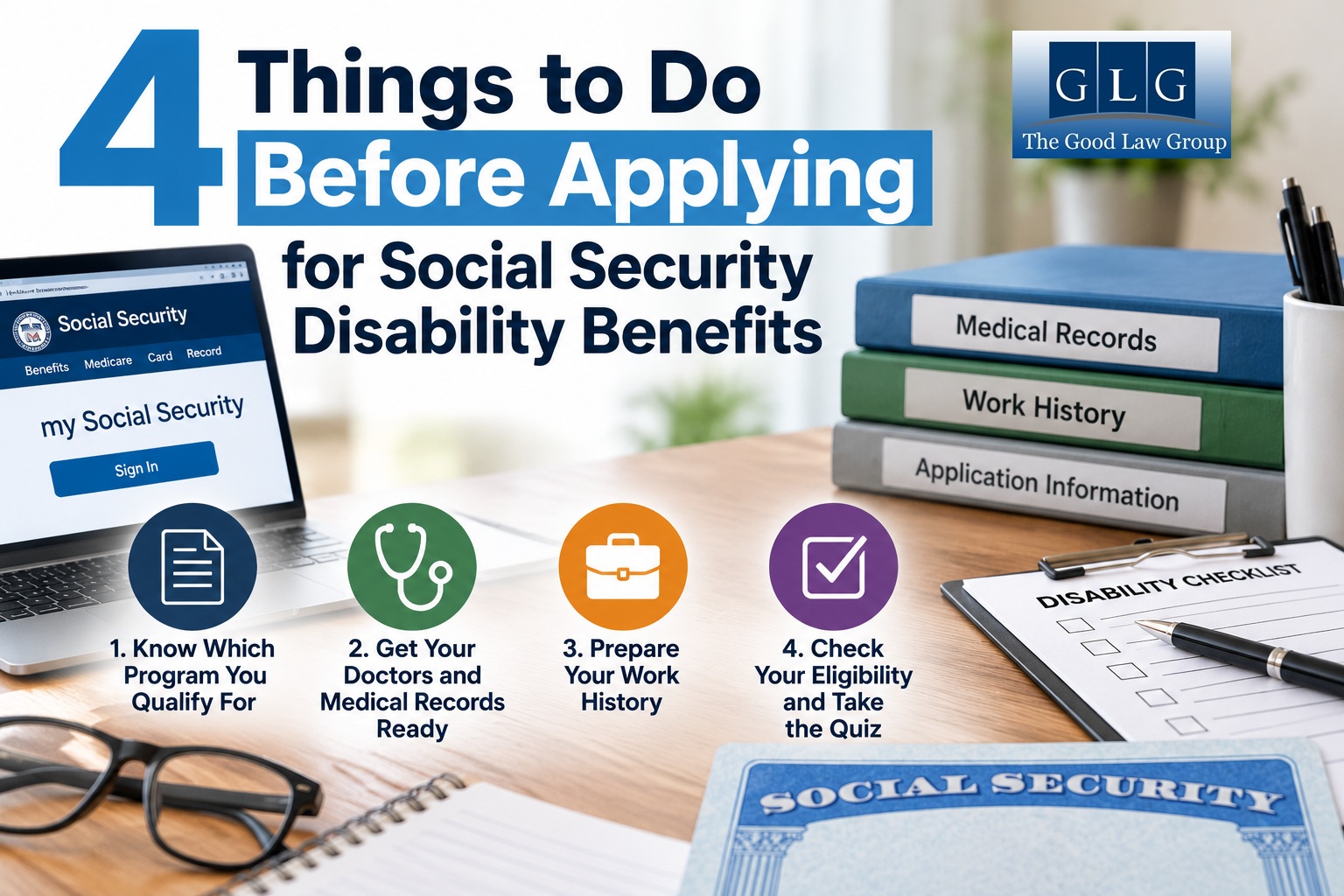
Whether you are considering Social Security Disability Insurance (SSDI) or Supplemental Security Income (SSI), there are four important steps you can take before starting the process. Knowing what to expect can make the application more manageable and help you identify potential issues before they delay your claim.
Key Takeaways
- Determine whether you may qualify for SSDI, SSI, or both before applying.
- Review your Social Security earnings record and estimated SSDI benefits through your my Social Security account.
- Gather medical records, treatment information, and a complete list of healthcare providers.
- Prepare an accurate work history, especially for jobs performed during the past five years.
- Consider a disability eligibility evaluation to better understand your options before applying or appealing a denial.
1. Do You Qualify for SSDI or SSI?
The first thing to understand before applying for disability benefits is which Social Security program may apply to your situation. Although SSDI and SSI both provide financial assistance to eligible people with disabilities, they have different eligibility requirements. Understanding these differences can help you determine which benefits to pursue and what information you will need when applying.
What Is the Difference Between SSDI and SSI?
Social Security Disability Insurance (SSDI) is generally available to people who have worked long enough and recently enough in jobs covered by Social Security and meet the program’s disability requirements. Your eligibility is based partly on your work history and the Social Security taxes paid through your employment. The monthly benefit amount is generally based on your covered earnings record, rather than your current household income or savings.
Supplemental Security Income (SSI) is a needs-based program for people with limited income and resources who are disabled, blind, or age 65 or older. Unlike SSDI, SSI does not require a qualifying work history. Some individuals may qualify for both programs, depending on their circumstances.
| SSDI | SSI |
|---|---|
| Generally requires sufficient Social Security work credits | Does not require work credits |
| Benefit amount is based on covered earnings history | Payment depends on applicable income and living arrangement rules |
| Not generally subject to an asset limit | Subject to income and resource limits |
| May provide Medicare eligibility after the applicable waiting period | May provide Medicaid eligibility, depending on state rules |
How Can You Check Your Estimated Social Security Disability Benefits?
Before applying, visit SSA.gov to create or sign in to your personal my Social Security account. Depending on your account information and eligibility, you can review your earnings history, work credits, and estimated disability benefits. This can help you understand whether you may qualify for SSDI and how much you could potentially receive each month.
Remember that an estimated SSDI payment is not a guarantee of approval, and SSI eligibility and payment amounts are determined differently. If you are unsure which program applies to you, reviewing your situation with a disability attorney may help clarify your options.
2. What Medical Records Do You Need Before Applying for Disability?
Medical evidence is one of the most important parts of a Social Security Disability claim. Social Security does not approve benefits simply because you report pain, fatigue, difficulty walking, or another symptom. The agency needs medical evidence establishing a qualifying impairment and information showing how your condition affects your ability to function and work.
Before applying, gather information about your doctors, specialists, hospitals, clinics, medications, medical tests, and treatment history. You do not necessarily need to obtain every medical record yourself before submitting an application, but providing complete and accurate treatment information can help SSA request the records it needs.
Which Medical Documents Are Important for an SSDI Application?
Depending on your medical condition, useful evidence may include:
- Medical records from primary care physicians and specialists
- Diagnostic imaging, including MRIs, CT scans, and X-rays
- Laboratory results and other medical testing
- Hospitalization and surgical records
- Physical therapy and rehabilitation records
- Mental health treatment and psychological evaluations
- Medication lists, side effects, and treatment responses
- Medical opinions describing work-related functional limitations
It is also important for your treatment records to explain how your symptoms affect everyday activities and work-related tasks. For example, someone with a spinal condition may have difficulty sitting, standing, lifting, or walking for extended periods. A person with migraines may experience unpredictable episodes that interfere with concentration or attendance, while someone with depression or anxiety may struggle to maintain focus, interact with others, or manage workplace stress.
Can You Get Disability Benefits If You Have Not Been Seeing a Doctor?
A lack of medical treatment can make a disability claim more difficult because Social Security may have limited evidence to evaluate your condition and functional limitations. However, not receiving regular treatment does not automatically disqualify you from benefits. SSA may consider explanations for limited treatment, including financial difficulties, lack of insurance, access to healthcare, and other circumstances.
If you are preparing to apply, seek appropriate medical care when possible, follow reasonable treatment recommendations, and explain any gaps in your medical history. The goal is to make sure your medical records accurately reflect your condition, symptoms, and limitations rather than relying only on statements made during the disability application or hearing.
3. Why Is Your Work History Important When Applying for SSDI?
Your work history is another important part of the Social Security Disability evaluation process. SSA needs to understand the jobs you performed, the duties involved, and the physical and mental demands of your previous work. This information helps the agency determine whether your medical limitations prevent you from performing qualifying past work and, when necessary, whether you could adjust to other work.
Before applying, prepare information about the jobs you performed during the past five years. Include job titles, employers, dates of employment, typical duties, hours worked, and the physical or mental requirements of each position. Social Security may also need information about older work for certain purposes, so follow the instructions on the application and any additional forms you receive.
What Work History Information Does Social Security Ask For?
SSA may ask you to describe:
- Job titles and employment dates
- Hours worked per day and week
- How much time you spent sitting, standing, and walking
- How frequently you lifted or carried objects and their approximate weight
- Whether your job required bending, reaching, climbing, or repetitive movements
- Whether you supervised employees or used specialized equipment
- Concentration, memory, communication, and other mental demands
- Reasons you stopped working or reduced your hours
Be specific when describing what you actually did at work. A job title alone may not accurately reflect your responsibilities. For example, two warehouse employees may have very different lifting requirements, and two office workers may have different demands involving concentration, customer interaction, or time spent sitting.
Why Is Work History Especially Important for Disability Applicants Over Age 50?
Age can affect how Social Security evaluates whether a disability applicant can adjust to other work. For certain applicants age 50 and older, SSA’s medical-vocational rules may be particularly important because they consider age, education, work experience, transferable skills, and residual functional capacity.
This does not mean people over 50 automatically qualify for disability benefits or that work history is unimportant for younger applicants. Social Security considers vocational factors under its applicable rules, and an accurate work history helps explain whether your previous skills and job experience are relevant to the disability determination.
4. Should You Check Your Eligibility Before Applying for Social Security Disability?
Before submitting an application, it can be helpful to complete a preliminary disability eligibility assessment. This may help you identify whether SSDI or SSI is more relevant to your situation, what information you still need, and whether your medical condition and work limitations warrant further review. However, an online assessment cannot guarantee that Social Security will approve your claim.
The Good Law Group offers a disability eligibility quiz designed to help individuals explore their options, whether they are preparing an initial application, requesting reconsideration, waiting for a hearing, or pursuing an appeal. The assessment can be a useful starting point for understanding where you are in the process and whether you may benefit from legal assistance.
What Are Common Mistakes to Avoid Before Applying for SSDI or SSI?
Many disability applicants focus primarily on their diagnosis without preparing the information Social Security needs to evaluate their claim. While a medical condition is essential to the disability determination, the application also requires accurate information about your treatment, work history, earnings, and ability to perform everyday activities.
Common mistakes include providing an incomplete list of doctors, failing to explain how symptoms affect work activities, describing previous jobs too vaguely, overlooking gaps in treatment, and assuming that having a serious diagnosis guarantees approval. Another mistake is delaying an application unnecessarily while trying to gather every document, particularly when a person may already meet the program’s eligibility requirements.
Preparing carefully can help you avoid preventable problems, but it is equally important to respond promptly to SSA requests and meet any applicable deadlines.
Can You Apply for Social Security Disability Without an Attorney?
Yes. You can apply for Social Security Disability benefits without hiring an attorney, and many people submit their initial applications on their own. However, the process can become complicated when medical evidence is incomplete, work history is difficult to classify, or Social Security denies the claim.
A Social Security Disability attorney can help you understand the eligibility requirements, identify important medical and vocational evidence, review the reasons for a denial, and prepare for the appeals process. Legal assistance may be particularly useful when your case involves multiple medical conditions, significant work-related limitations, or questions about whether you can perform past or other work.
What Should You Do After Preparing Your SSDI or SSI Application?
Once you understand the disability programs, review your benefit information, organize your medical treatment history, and prepare your work history, you can move forward with greater confidence. You can learn about applying for disability benefits through the Social Security Administration’s official disability website.
After applying, continue receiving appropriate medical care, keep your contact information current, and respond to requests from Social Security or Disability Determination Services. If your application is denied, review the notice carefully and pay attention to the appeal deadline. In most cases, you generally have 60 days after receiving the decision notice to request an appeal.
Get Help Preparing Your Social Security Disability Claim
Applying for SSDI or SSI can feel overwhelming, especially when a medical condition has already affected your ability to work and support your family. Understanding which program you may qualify for, gathering medical evidence, and preparing an accurate work history are important steps toward building a well-documented disability claim.
The Good Law Group helps individuals navigate Social Security Disability applications, reconsiderations, hearings, and appeals. Whether you are preparing to apply or have already received a denial, our attorneys can review your situation and help you understand your next steps.
Call (800) 419-7606 for a free Social Security Disability case evaluation.
This article is for general informational purposes only and does not constitute legal advice.