


Applying for Social Security disability benefits can be challenging and the Social Security Administration (SSA) can deny a claimant’s application for a wide variety of reasons. Sometimes those reasons are outside of a claimant’s control, while other times a claimant may be able to avoid doing something in particular that results in a claimant being denied disability benefits.
The process of applying for Social Security disability can be lengthy and complicated, so it is easy for a claimant to get confused and make mistakes that could result in his or her disability benefits being denied. To avoid being denied disability benefits, understand the top reasons why you may be denied disability and learn about the common mistakes applicants who have been denied disability benefits have made.
In this guide, we’ll cover the top 5 most common reasons SSDI claims are denied, the mistakes to avoid, and what steps to take if you’ve already received a denial letter from the Social Security Administration (SSA).
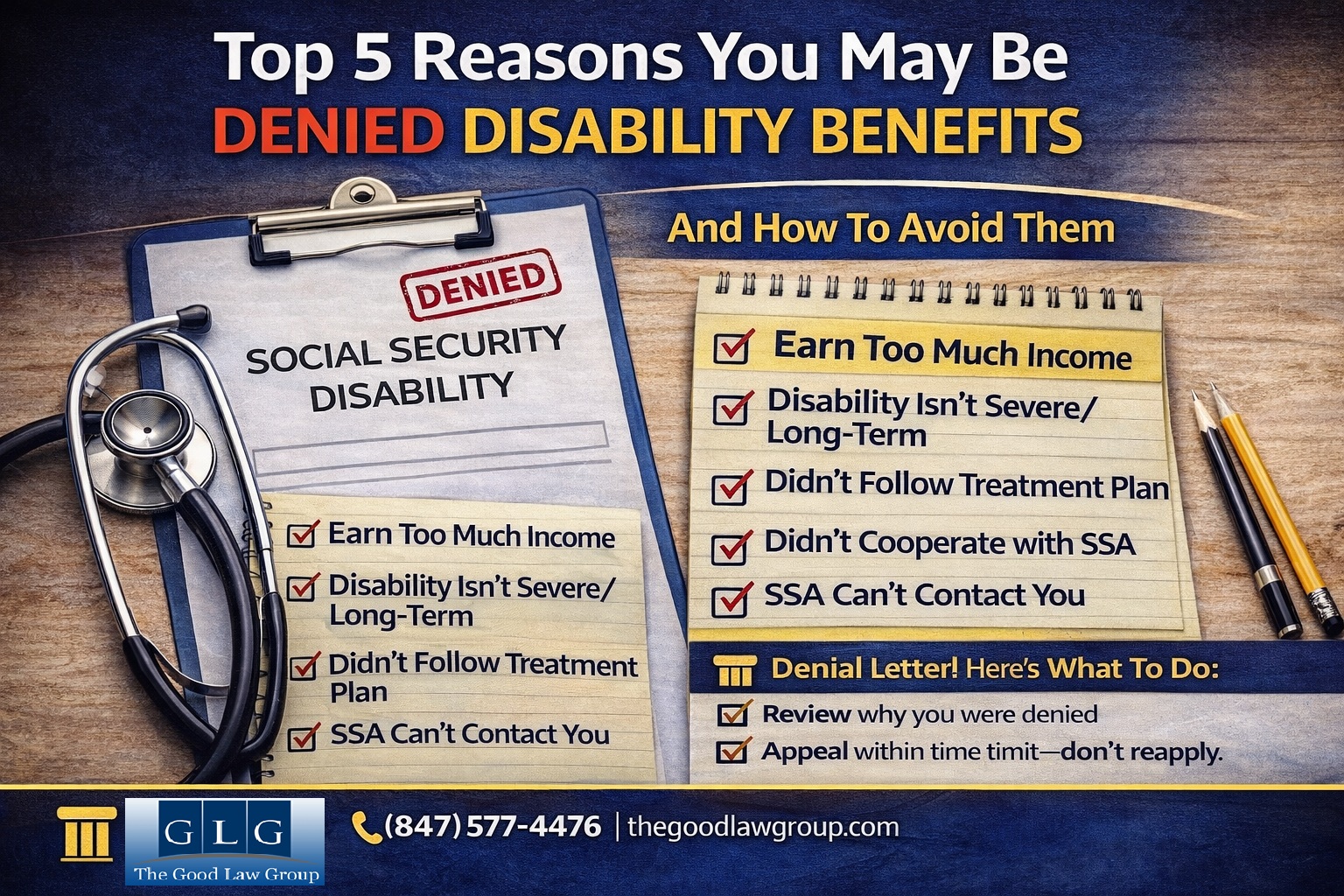
Top reasons claimants are denied disability benefits
# 1 – Earning too much income
The most common reason that claimants are denied disability benefits is that they earn too much income. While claimants are allowed to work a small amount when they apply for and are collecting disability benefits, the income earned cannot exceed the substantial gainful activity (SGA) limit per month. Income shows a claimant’s ability to work, so if a claimant is earning above the SGA limit then the SSA believes the claimant is not disabled enough to the point where he/she cannot work.
✅ Avoid This Mistake:
Stop working or reduce hours below SGA before applying. Also, don’t collect unemployment benefits while pursuing disability.
# 2 – The Disability isn’t severe or won’t last long enough
Social Security disability benefits cover long-term and permanent disabilities. To qualify for disability benefits, the SSA must believe a claimant’s impairment is severe enough to last at least 12 months or result in the claimant’s death. As such, claimants who request disability for short-term conditions are often denied. For example, claims based on bone fractures are often denied because those injuries generally heal in less than a year. However, each case is evaluated on an individual basis so it is possible that disability benefits for severe bone fractures may still be approved.
✅ Avoid This Mistake:
Include mental health conditions or co-occurring impairments in your claim if applicable. These often strengthen your application.
# 3 – A Failure to follow doctor’s treatment plan
The SSA may deny disability benefits to a claimant who is being treated by a doctor, but who refuses to follow the doctor’s prescribed treatment plan. A treatment plan may include taking medicine, going to therapy appointments, or undergoing surgery. However, the SSA does recognize certain legitimate medical and non-medical excuses for failing to follow the doctor’s orders.
✅ Avoid This Mistake:
Follow your treatment plan or document valid reasons (like side effects or religious beliefs) for not doing so.
# 4 –A Failure to cooperate with the SSA’s process
Medical records and information about a claimant’s impairments are a key part of any Social Security disability application. Thus, if a claimant refuses to release his or her medical records to the SSA or refuses to take part in a requested consultative evaluation with a physician, the claimant will likely be denied disability benefits. By refusing to cooperate with the investigation in these ways, the SSA may choose to deny a claimant’s application based on inadequate medical information.
✅ Avoid This Mistake:
Respond to SSA requests promptly and attend all scheduled evaluations.
# 5 – The SSA cannot contact you
The SSA has to be able to communicate with claimants about their applications. If the SSA cannot find a claimant to schedule medical examinations or to discuss important matters, the claimant may be denied disability benefits. It is very important that claimants update their contact information with the SSA if that information has changed.
✅ Avoid This Mistake:
Update your phone number, address, and email with the SSA, and check the status of your application regularly.
What to do if you’ve been denied disability benefits
If you have been denied disability benefits, first figure out why your application was denied. You should consider hiring an experienced Social Security disability lawyer to help appeal the denial of benefits. Your attorney can request an appeal from the local SSA office.
Avoid the common mistake of filing a new application rather than appealing the negative decision. A claimant has the best chance of winning his or her claim and being awarded disability benefits during the appeals process and filing a new application will waste a significant amount of time.
✅ Steps After a Denial:
- Review your denial letter to understand the reason
- File a Request for Reconsideration within the deadline
- If denied again, request a hearing before an Administrative Law Judge (ALJ)
- Consider hiring a Social Security disability attorney to improve your chances
🔍 Pro Tip: Filing a new application instead of appealing wastes time and resets your process. Always appeal.
There are many details to take care of during a first time social security disability application and the appeals process if you are denied social security disability benefits. Your chances for a successful case that results in you receiving benefits increase when you have an experienced representative on your side.
Let The Good Law Group Help
Our experienced disability attorneys help you avoid mistakes that delay or derail your claim. We know what evidence matters, how to present it clearly, and how to win at each stage especially in appeals and hearings.

📞 Call us today at (847) 577-4476 for a free consultation.
Related FAQs
Why does the SSA deny so many applications?
Many initial claims lack strong medical documentation or don’t clearly meet SSA criteria.
How long does it take to appeal a denial?
Reconsideration can take several months; an ALJ hearing may take 12–15 months depending on your region.
Can I work part-time while applying for SSDI?
Yes, but your income must remain below the SGA limit to stay eligible.